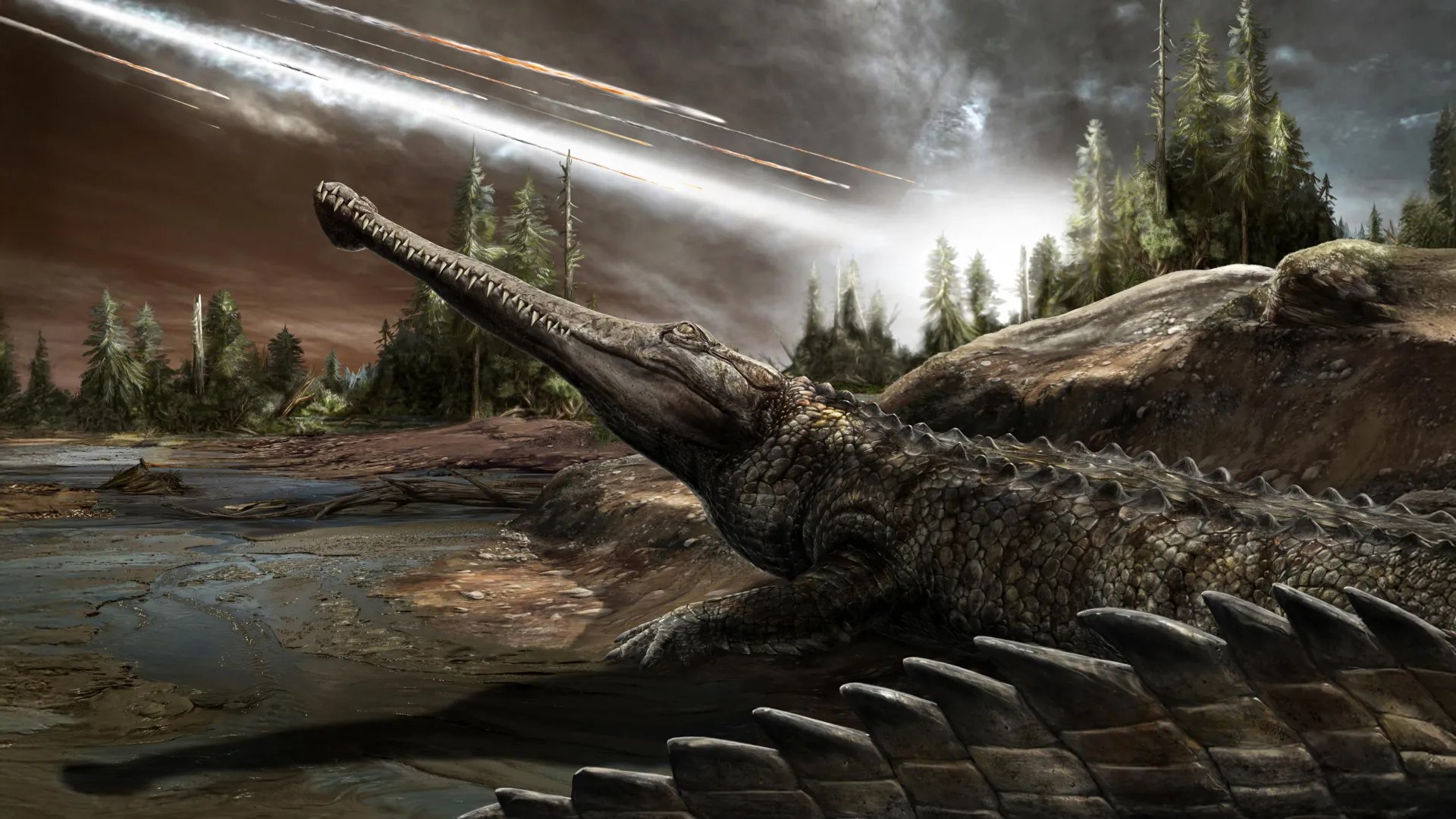
When the asteroid hit 66 million years ago, it did not render the entire planet uninhabitable. A new study of over 7,000 fossils shows that crocodiles and their relatives tracked warm climates rather than adapting to new temperatures. This strict thermal preference kept them in equatorial refuges where conditions remained relatively stable, unlike the collapsing habitats of non-avian dinosaurs.
It is a reminder that survival in a mass extinction often comes down to geography and existing habits rather than clever adaptation. Yet the lineage's remarkable anatomical history—producing everything from bus-sized predators to tiny pug-faced herbivores—shows that physical diversity can thrive while core ecological requirements remain rigid. We should be cautious about reading too much purpose into these ancient patterns, as the same climate conservatism that saved them once could make them uniquely vulnerable to rapid warming today.
more: https://www.sciencedaily.com/releases/2026/10/261030002922.htm
my other side: ivo.blogspot.com


Leave a Reply